

Automation and Modernization in Limited Space: How Joineries Increase Productivity
11.11.2026 г.
High construction costs, growing customer requirements, and a shortage of skilled labor are leading many joineries and interior fit-out companies to the same question: How can production capacity be increased when expanding the workshop or building a new facility is not an option? The answer lies in intelligent manufacturing concepts, automated processes, and the optimal use of existing production space.
Every Square Meter Matters
Economic pressure on craft businesses and SMEs remains high. At the same time, companies want to grow, take on new projects, and maintain their competitiveness. As workshop extensions and new buildings are often postponed due to high investment and financing costs, the focus is shifting toward the efficient use of existing production space.
The key question is no longer how many square meters are available, but how much productivity can be achieved within the same footprint.
Particularly in interior fit-out, furniture manufacturing, and contract business, significant potential can be unlocked through the targeted modernization of production processes. Modern machinery, software, and automation solutions enable substantially higher output levels on the same shop floor than was possible just a few years ago.
This topic is especially relevant for joineries and interior fit-out companies manufacturing furniture, kitchens, shopfitting projects, contract furnishings, office interiors, interior fit-outs, and customized products. Production often takes place in restricted spaces while demands for variety, quality, and delivery speed continue to increase.
Growth Without Expanding Your Workshop
Many woodworking businesses operate in workshops that have evolved over decades. Machines have been added over time, material flows have developed organically, and processes are often shaped by the available building layout.
As order volumes increase, these structures can reach their limits:
- Long material routes consume valuable time.
- Manual transports tie up skilled workers.
- Buffer storage occupies valuable floor space.
- Machine downtime reduces productivity.
- Lack of connectivity leads to information gaps and process interruptions.
Modern production planning therefore focuses not only on individual machines but on the entire material and information flow. The goal is to reduce unnecessary movements, automate processes, and optimize space utilization.
Automation Also Fits into Small Workshops
For a long time, automation was seen as a topic primarily for large industrial manufacturers. Today, small and medium-sized joineries increasingly benefit from compact solutions specifically designed for limited production space.
Examples include:
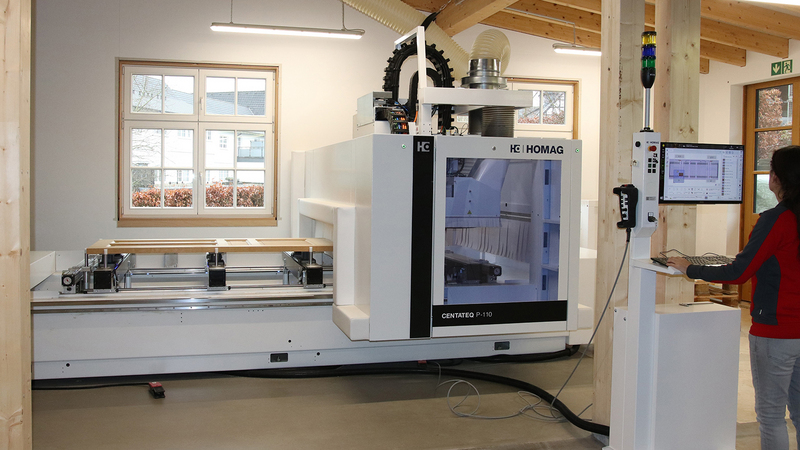
- Space-saving CNC processing centers such as the CENTATEQ P-110 Slim for CNC machining in confined spaces
- Vertical CNC machining with the DRILLTEQ V-110 helping conserve valuable production space
- Compact return systems such as the LOOPTEQ O-400
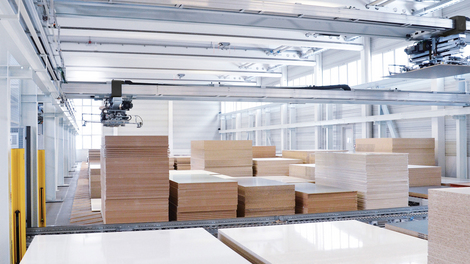
- Automated loading systems such as the FEEDTEQ G-200 | STACKTEQ G-200 and the STORETEQ F-100
- Intelligent storage solutions such as the STORETEQ P-310|P-510
- Automated storage and material supply systems that reduce unproductive transport routes
- Digital production control with productionManager
- Connected software solutions for end-to-end processes using ControllerMES
Modern automation does more than increase productivity. It relieves employees of repetitive and physically demanding tasks, creates more time for value-adding activities, and improves working conditions. This can increase employee satisfaction and support the long-term retention of skilled workers.
More Output per Square Meter
One of the most important indicators of modern production concepts is output per square meter.
An intelligent combination of software, machinery, and automated material flows can:
- Reduce throughput times
- Minimize material movements
- Shorten setup times
- Lower error rates
- Increase production capacity
Especially where space is limited, success depends not only on the performance of individual machines but on a continuous material and data flow.
The intelligent integration of storage, material handling, cutting, CNC processing, edgebanding, and assembly ensures that materials and information are available at the right place and at the right time. Automated transport and storage processes reduce unnecessary travel distances, create additional capacity, and enable higher productivity per square meter.
Skilled Labor Shortages as an Additional Driver
In addition to spatial constraints, the shortage of skilled workers is one of the key factors influencing investment decisions.
Many companies face the challenge of handling increasing order volumes while maintaining the same, or even a smaller, workforce. Automation and digital processes help ensure that qualified employees can focus on value-adding activities.
Skilled workers are difficult to find, while requirements for quality, delivery performance, and customization continue to rise.
Automation helps companies make better use of existing resources. Repetitive tasks can be standardized and digitally supported, allowing skilled employees to concentrate on more demanding work. As a result, productivity grows not necessarily through additional personnel but through better processes.
The Workshop of the Future Starts with Existing Facilities
Modernizing a joinery does not necessarily begin with a new building. In many cases, significant efficiency gains can already be achieved through targeted improvements.
Potential starting points include:
- Intelligent Machine Layout
Short distances between storage, cutting, machining, and assembly reduce transport times and improve material flow. - Digitalized Data Flows
Production data is transferred directly from planning to manufacturing, eliminating errors and manual intermediate steps. - Automated Material Supply
Materials are available at the right place and at the right time, reducing unproductive searching and transport activities. - Scalable Automation
Automation solutions can be implemented step by step and adapted to company growth. - Securing Competitiveness in Limited Space
The demands placed on joineries and interior fit-out companies will continue to increase. Customers expect short lead times, high quality, and customized solutions. At the same time, skilled workers remain scarce, and investments must be economically viable.
Under these conditions, making the best possible use of existing production space becomes a decisive competitive advantage.
Companies that digitalize their processes, optimize material flows, and strategically implement automation can grow without having to create additional production space.
The workshop of the future will not necessarily be larger. It will be smarter.
More Output in the Same Space: How Our Customers Grow Without New Buildings
Schreinerei Rumstadt: CNC Technology Despite Limited Space
A space-saving CNC solution creates new opportunities without changing the existing workshop.
Schreinerei Rumstadt demonstrates that there is often room for modernization even within established workshop structures. For many years, the integration of a CNC machining center seemed impossible due to space limitations. By choosing a solution specifically designed for a reduced footprint, the company was able to expand its production capabilities without fundamentally altering the workshop layout.
Today, the business benefits from greater efficiency, higher precision, and new possibilities in manufacturing. The example illustrates how modern technology can open the door to new production opportunities even in very limited spaces.
Schreinerei Rumstadt: CNC technology successfully integrated in a restricted production environment.
Holzmanufaktur Jürgens: Greater Efficiency Through Connected Manufacturing
Connected manufacturing and optimized processes deliver higher performance in limited space.
Holzmanufaktur Jürgens demonstrates how modern craft businesses can future-proof their production. Rather than relying on additional production space, the company focuses on optimized processes, digital data flows, and the efficient use of existing resources. The connection between planning, cutting, and CNC processing creates transparent workflows and supports efficient production of customized projects.
This unique manufacturer continues to grow within a very limited footprint
BK Linea: 40% Higher Performance in the Same Space
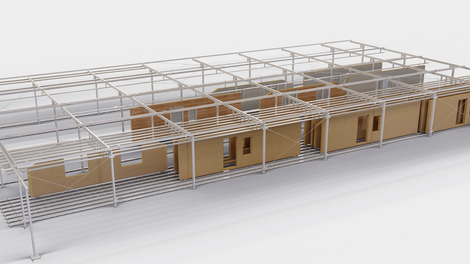
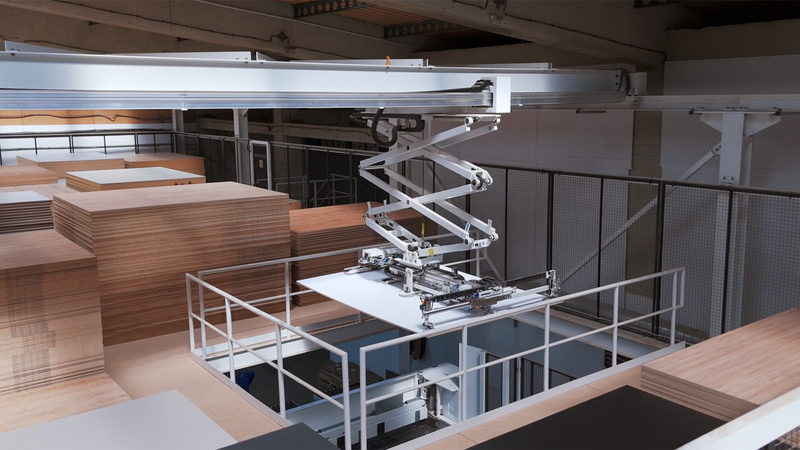
Cutting and storage on two levels demonstrate how additional capacity can be created without expanding the facility.
Another excellent example is BK Linea. By integrating a saw and storage system on a second level, the company significantly increased production performance. The project shows how intelligent layout and automation concepts can create additional capacity without increasing production floor space.
BK Linea: 40% higher performance with saw and storage on a second level
horatec: Automated Material Flows for Higher Capacity
Automated storage and cutting processes increase productivity and material availability, even with high product variety.
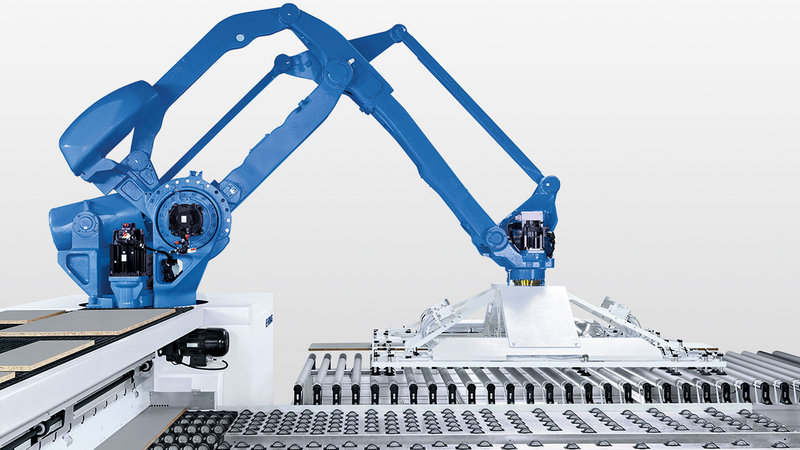
At horatec, the focus is also on increasing efficiency and optimizing processes. Automated storage and cutting solutions improve capacity, quality, and productivity while supporting economical production despite a high level of customization.
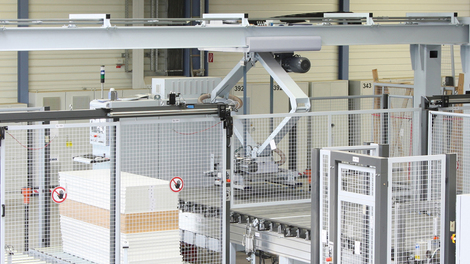
Robot-assisted cutting with the SAWTEQ B-320 flexTec
Dani Vock AG:
CENTATEQ P-110 Slim successfully integrated despite challenging space constraints (LinkedIn)
Abate & Partner AG:
Machine integration under demanding space conditions.
CENTATEQ P-110 successfully installed despite highly challenging installation conditions (LinkedIn)
How Much Potential Is Hidden in Your Existing Production Space?
Our experts analyze your material flow, machine layout, and automation potential together with you. This helps identify opportunities to increase capacity, productivity, and space efficiency without expanding your facility.
Frequently Asked Questions
How can a joinery grow without expanding its workshop?
By optimizing material flows, implementing automation, improving machine layouts, and digitizing production processes, productivity per square meter can be significantly increased.
Is automation worthwhile for small joineries?
Yes. Modern automation solutions are now available for small and medium-sized businesses and can be implemented step by step.
Which machines help when space is limited?
Space-saving CNC machining centers, vertical processing centers, compact return systems, and automated storage solutions support highly efficient use of available production space.
How does automation help address skilled labor shortages?
Repetitive activities are automated, allowing skilled workers to focus on value-adding tasks and higher-level responsibilities.